
Leg Pain Caused by Spine Conditions
Spine-Related Leg Pain Specialists in Beaumont and Houston, TX
Leg pain that originates from the spine rather than the muscles or joints of the leg itself is often misunderstood. In many cases, the root cause is a structural or degenerative change in the spine that impinges nerves, alters biomechanics, or triggers referred symptoms down the leg.
When the nerves exiting the lower spine become irritated, compressed, or inflamed, patients may feel tingling, burning, or sharp pain traveling from the buttock, down the thigh, behind the knee, and into the calf and foot. Recognizing that your leg pain may actually stem from a spinal condition is the first step toward meaningful relief.
Are You Ready to Get Back to Normal?
We treat a variety of spine conditions, including acute back disorders, sciatica, scoliosis (both adult and pediatric), failed spine surgeries, spinal deformities, fractures, spondylolisthesis, and pinched nerves. At Spine Associates, we know the importance of addressing inflammatory and degenerative conditions such as herniated discs, degenerative disc disease, spinal stenosis, osteoporosis, and arthritis. Call us at 888-977-4625 to schedule your appointment.
Common Spinal Causes of Leg Pain: Understanding Nerve Root Irritation
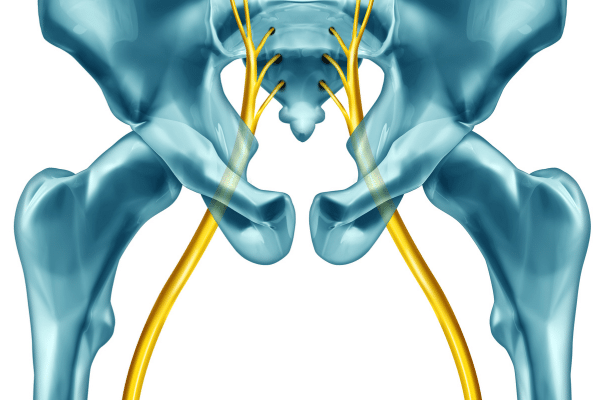
Several spinal conditions can produce leg pain. A herniated disc, spinal stenosis, spondylolisthesis, or degenerative disc disease in the lumbar region often impacts the nerve roots that serve the leg.
When a disc bulges or a vertebra shifts, it can narrow the conduit by which the nerve travels. That narrowing can create compression, inflammation, or impaired nerve signal—resulting in pain, numbness, or weakness in the leg. In some cases, the leg itself may appear fully functional, yet the problem lies higher up in the spine.
It’s not unusual for patients to chase the leg pain and miss the spinal origin. At Spine Associates, we emphasize the spinal-and-nerve connection so that your treatment plan addresses the true source of discomfort, not just the symptom.
Identifying the Signs: Leg Pain That May Be Spine-Related
Leg pain stemming from the spine often presents differently than pain caused by a muscle strain or joint arthritis. One may feel a sharp, electric-shock-like pain shooting into the leg during certain movements, or a tingling, burning sensation radiating when standing or walking for long periods.
Leg weakness, difficulty lifting the foot (foot drop), or numbness in the outer thigh or calf are red flags that the lumbar spine may be involved. If bending forward, standing upright, or sitting alleviates or worsens your leg symptoms, that pattern offers a clue as to whether the spine is the source. Recognizing those signs and obtaining a proper spine evaluation can prevent misdiagnosis, delayed treatment, and prolonged discomfort.


Why Proper Spine-Focused Treatment Matters for Leg Pain
Treating leg pain without addressing the underlying spinal issue is analogous to painting over the crack in a wall instead of repairing the foundation.
When a nerve root is irritated, the longer the compression continues, the greater the risk to nerve health, muscle function, and mobility. Left uncorrected, nerve-driven leg pain can progress to chronic numbness, weakness, or even permanent nerve damage.
A spine-centered team—such as the one at Spine Associates—treats leg pain as part of the overall spinal health framework, evaluating alignment, disc health, canal size, nerve condition, and patient lifestyle to design an effective plan for lasting relief, improved mobility, and return to active life.
Treatment Strategies Tailored to Spine-Related Leg Pain
An individualized approach to leg pain from spinal causes often begins with a thorough diagnostic work-up to identify the exact spinal origin and the nerve(s) involved. Conservative management may include physical therapy to improve core and back strength, posture, and gait correction, nerve mobilization exercises, and targeted pain-relief strategies such as epidural or facet injections when indicated.
Should the spinal anatomy require it—for example, in cases of severe herniation or stenosis causing persistent leg symptoms—minimally invasive surgical options may be considered to decompress the nerve, stabilize the spine, and restore proper function. Our goal at Spine Associates is to relieve your leg pain by treating the spine first, so you experience meaningful improvement rather than temporary symptom relief.

FAQs About Leg Pain From Spinal Conditions
How do I know if my leg pain is caused by my spine?
Leg pain from spinal origins often travels in a line along a nerve pathway, is accompanied by numbness or weakness, and may worsen or improve with changes in posture or spine movement.
Can leg pain from the spine improve without surgery?
Yes, many patients respond well to physical therapy, posture correction, nerve treatment, and non-surgical spine treatments when diagnosed early. Surgery is reserved for cases where anatomy or symptoms fail to improve with conservative care
When should I see a spine specialist for leg pain?
If leg pain persists, increases, is accompanied by numbness or weakness, or affects your walking or balance, you should seek a spine evaluation rather than just treating the leg symptoms alone.