
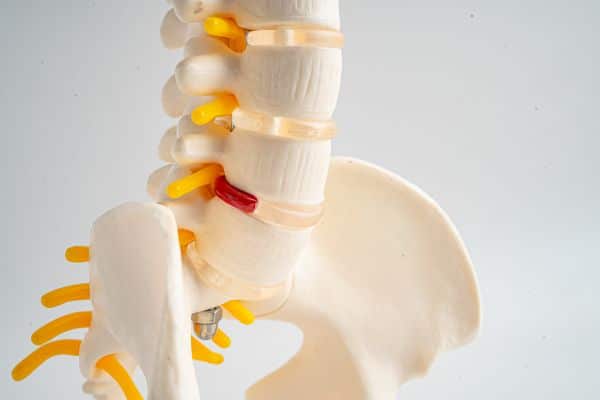
Back and neck pain are among the most common reasons people seek spine care. Two of the most frequent causes are herniated discs and spinal stenosis. While both conditions can compress spinal nerves and cause similar symptoms, they develop differently and require different treatment approaches. Understanding the distinction between a herniated disc vs spinal stenosis can help you recognize your symptoms and seek appropriate care.
What Is a Herniated Disc?
A herniated disc occurs when the soft inner material of a spinal disc pushes through its tougher outer layer. Discs act as cushions between the bones of your spine, allowing for flexibility and absorbing shock. When a disc herniates, it can press on nearby nerves.
Herniated discs most often occur in the lower back (lumbar spine) or neck (cervical spine). They may develop gradually due to wear and tear or suddenly from lifting, twisting, or injury.
Common symptoms of a herniated disc include:
- Sharp, radiating pain in the arm or leg
- Numbness or tingling
- Muscle weakness
- Pain that worsens with certain movements
- Pain that may improve with rest
In the lower back, a herniated disc may cause sciatica, where pain travels down the leg.
What Is Spinal Stenosis?
Spinal stenosis refers to the narrowing of the spaces within the spine, which can place pressure on the spinal cord or nerves. This narrowing typically develops slowly over time due to age-related changes, arthritis, thickened ligaments, or bone spurs.
Spinal stenosis most commonly affects the lower back and neck and is more frequently seen in adults over age 50.
Symptoms of spinal stenosis often include:
- Gradual onset of pain
- Numbness or tingling in the arms or legs
- Weakness in the extremities
- Pain that worsens with standing or walking
- Relief when sitting, bending forward, or resting
Many patients with lumbar spinal stenosis notice difficulty walking long distances due to leg pain or heaviness.
Key Differences Between Herniated Disc and Spinal Stenosis
Although both conditions involve nerve compression, there are important differences between them.
A herniated disc often causes sudden or more localized nerve compression as disc material presses on a nerve. Symptoms may begin after lifting or injury and can affect younger or middle-aged adults.
Spinal stenosis typically develops gradually due to structural narrowing in the spine. Symptoms often progress slowly and are more common with aging.
Another key difference is symptom patterns. Herniated disc pain may worsen with sitting, bending, or lifting, while spinal stenosis pain often worsens with standing or walking and improves when leaning forward.
Accurate diagnosis is essential to determine which condition is causing your symptoms.
How Spine Specialists Diagnose These Conditions
A thorough evaluation includes a physical examination and a review of symptoms and medical history. Imaging studies such as MRI scans are often used to visualize disc herniation, nerve compression, or spinal narrowing.
These tools help identify the exact source of pain and guide treatment planning.
Treatment Options to Relieve Nerve Compression
At Spine Associates, treatment begins with conservative care whenever possible. Many patients improve without surgery.
Non-surgical treatment options may include:
- Physical therapy to strengthen and support the spine
- Anti-inflammatory medications
- Activity modification
- Image-guided spinal injections
These treatments help reduce inflammation and relieve pressure on nerves.
If symptoms persist or worsen despite conservative treatment, surgical options may be considered to decompress nerves and restore function.
Get an Accurate Diagnosis and the Right Treatment
Both herniated discs and spinal stenosis can significantly affect your comfort and mobility, but effective treatment is available. Early evaluation allows spine specialists to identify the cause of your symptoms and recommend the most appropriate care.
Spine Associates in Houston and Beaumont provides comprehensive spine evaluations and individualized treatment plans focused on restoring function and improving quality of life.