
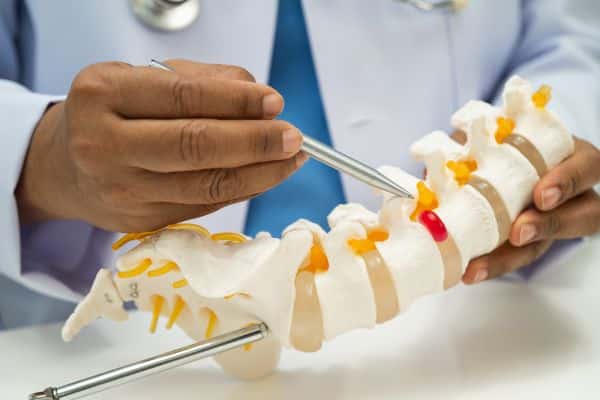
Back pain is a common issue, but in some cases, it may be linked to an underlying spine condition called spondylolisthesis. While the name can sound complex, it simply refers to a condition where one vertebra (a bone in the spine) slips forward over the one below it. This shift can place stress on the spine and surrounding nerves, leading to discomfort or other symptoms.
Understanding the signs of spondylolisthesis can help you determine when it may be time to seek evaluation.
What Is Spondylolisthesis?
Spondylolisthesis occurs when there is instability in the spine, allowing a vertebra to move out of its normal position. This most often affects the lower back (lumbar spine), though it can occur in other areas as well.
There are several possible causes, including:
- Age-related wear and tear (degenerative changes)
- Stress fractures from repetitive motion (common in athletes)
- Congenital conditions present at birth
- Injury or trauma to the spine
In many cases, the condition develops gradually over time.
Common Symptoms of Spondylolisthesis
Not everyone with spondylolisthesis experiences symptoms. However, when symptoms are present, they may include:
- Lower back pain, especially with standing or walking
- Pain that improves when sitting or bending forward
- Tightness or stiffness in the lower back or hamstrings
- Pain that radiates into the hips, buttocks, or legs
- Numbness, tingling, or weakness in the legs (if nerves are affected)
Symptoms can vary depending on how much the vertebra has shifted and whether nearby nerves are involved.
How It Differs From General Back Pain
While muscle strain is a common cause of back pain, spondylolisthesis-related pain often has a few distinguishing features. For example, pain may worsen with activity or standing upright and improve with rest or forward bending.
If nerve compression is present, symptoms may extend beyond the lower back, affecting the legs—a condition sometimes referred to as radicular pain or sciatica.
How Spondylolisthesis Is Diagnosed
A proper diagnosis typically begins with a medical history and physical examination. If spondylolisthesis is suspected, imaging studies such as X-rays, MRI, or CT scans may be used to confirm vertebral alignment and assess any nerve involvement.
Early evaluation can help guide appropriate treatment and prevent symptoms from worsening.
Treatment Options for Spondylolisthesis
Treatment depends on the severity of the condition and your symptoms. Many people improve with non-surgical care, including:
- Activity modification to reduce strain on the spine
- Physical therapy to strengthen core and back muscles
- Anti-inflammatory medications, if appropriate
- Bracing in certain cases
Surgical options may be recommended to patients with significant nerve compression or spinal instability to stabilize the spine and relieve pressure on nerves.
When to See a Spine Specialist
If your back pain is ongoing, worsening, or accompanied by leg pain, numbness, or weakness, it’s important to seek medical evaluation. These symptoms may indicate a condition like spondylolisthesis that requires targeted care.
At Spine Associates, our team specializes in diagnosing and treating spine conditions using a personalized, patient-focused approach. We work to identify the cause of your pain and recommend treatment options that support long-term relief and function.
If your back pain isn’t improving—or feels different from a typical strain—getting the right diagnosis is the first step toward feeling better. Schedule a consultation with Dr. Richard Francis at our Houston or Beaumont, TX spine clinic.